
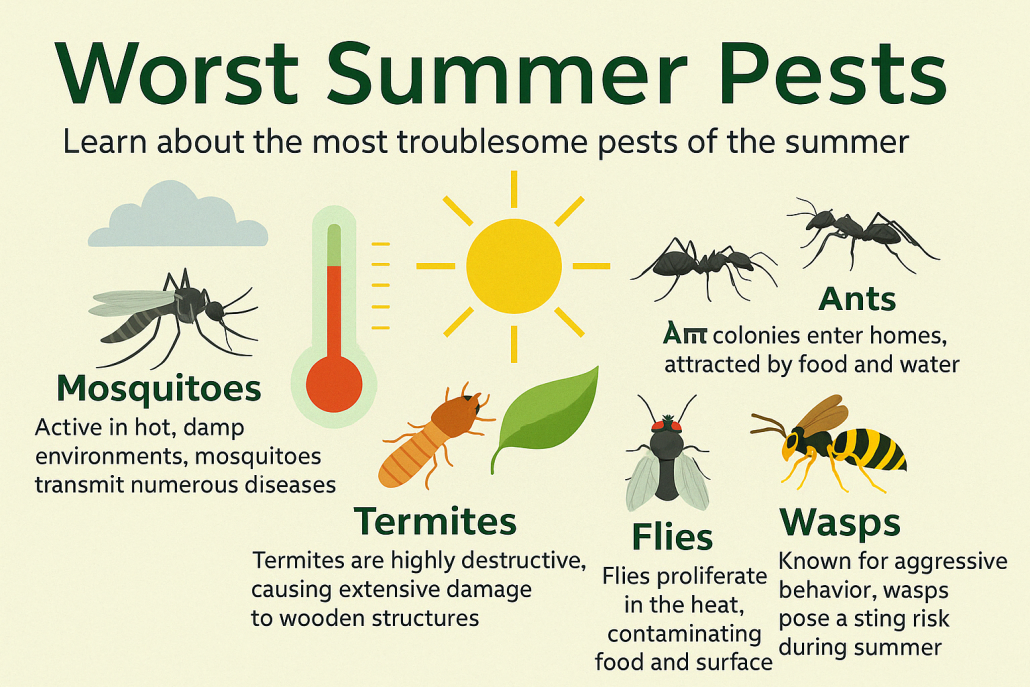
The Worst Summer Pest Is Coming, And It’s Not Who You Think
What TruNorth Pest Control Wants You to Know Before It’s Too Late
As temperatures climb and summer edges closer, most homeowners start thinking about grilling out, late sunsets, and maybe a few pesky mosquitoes buzzing around. But the truth is, there’s one pest that causes more panic, discomfort, and long-term damage during the summer months than almost any other: ants.
That’s right. While termites and mosquitoes certainly earn their reputation, it’s ants—particularly fire ants and carpenter ants—that take the crown for summer’s worst pest.
In this blog post, TruNorth Pest Control breaks down:
-
Why ant activity peaks during summer
-
The top ant species you should watch for
-
What makes them so hard to eliminate
-
Unique facts most homeowners don’t know
-
How to protect your home before an infestation begins
Why Ants Thrive in the Summer
Summer is prime time for ants. The warmth boosts their metabolism and speeds up colony reproduction. Add in more outdoor food sources—picnics, pet bowls, trash bins—and you’ve got an ant paradise.
But what makes them so frustrating is how they behave when the weather heats up. Ants are highly adaptive. When their food supply or nest is threatened by heat or water (especially during summer thunderstorms), they move—fast.
And where do they go? Right into your home, your walls, your kitchen, and even your electrical equipment.
The Most Troublesome Ant Species in the Southeast
If you live in Georgia, Florida, or the Carolinas, you’re likely to run into one (or more) of these aggressive ant species this summer:
1. Fire Ants (Solenopsis invicta)
The ultimate summer villains. Fire ants build large mounds in lawns and fields, and their painful stings can cause allergic reactions. Unlike most ants, fire ants don’t just bite—they latch on and sting repeatedly.
What makes them worse in summer?
Their colonies grow larger and more aggressive as temperatures rise. Heavy summer rain? Expect new mounds to pop up overnight.
Fun fact: Fire ants originated in South America and arrived in the U.S. through the port of Mobile, Alabama in the 1930s.
2. Carpenter Ants (Camponotus spp.)
While not as painful as fire ants, carpenter ants can cause structural damage that rivals termites. They hollow out wood to build their nests, often inside walls, attics, and crawlspaces.
What makes them worse in summer?
They swarm to create new colonies during late spring and early summer—and your home is their ideal real estate.
Cool fact: Carpenter ants don’t eat wood. They chew it up to make space, leaving behind a sawdust-like material called “frass.”
3. Argentine Ants (Linepithema humile)
Tiny but mighty. These ants form super-colonies, meaning thousands of queens and millions of workers in a single connected network.
Why are they a problem in summer?
Warm weather triggers rapid expansion. You may wipe out one trail, but they just reroute and keep marching.
Weird fact: Argentine ants love electronics. They’re known to swarm into circuit boards and short them out.
Why Ant Infestations Are So Hard to Control
Ants are not like the occasional roach or lone spider. They’re social insects with well-organized colonies, backup queens, and backup plans. Killing a few ants on the counter doesn’t stop the thousands hidden behind your walls.
In fact, DIY ant sprays can make infestations worse. Why?
-
They split colonies when threatened (this is called budding)
-
Surface sprays kill scouts but leave the colony intact
-
Some baits take days to work and must be chosen by species
And let’s not forget: ants can enter through cracks as small as 1/16 of an inch. That’s thinner than a credit card.
The Hidden Cost of Ignoring Ants
While a few ants in your pantry may seem minor, untreated infestations can lead to:
-
Structural damage from carpenter ant tunneling
-
Electrical hazards from ants nesting in outlets or fuse boxes
-
Painful stings and allergic reactions, especially in children or pets
-
Spoiled food and cross-contamination in kitchens
And because summer is when colonies are most active, ignoring the signs now can turn a small issue into a full-blown invasion by July.
How TruNorth Pest Control Handles Summer Ant Problems
At TruNorth Pest Control, we take a strategic, science-backed approach to ant control:
1. Accurate Species Identification
Not all ants are the same. We inspect and identify the exact species to match the right treatment plan—saving you time and money.
2. Non-Repellent Treatment Zones
We use professional-grade, non-repellent solutions that ants can’t detect. They walk through it, carry it back to the colony, and spread it.
3. Colony Elimination
Our goal is not just killing visible ants—but eliminating the entire colony, including the queen(s).
4. Barrier Creation and Prevention
We create a protective barrier around your home’s perimeter to stop ants before they come inside.
5. Seasonal Maintenance
Summer heat fuels pest activity. Our quarterly treatment plans keep your home protected before problems arise.
How to Spot the Early Signs of Ant Activity
Be proactive this summer by watching for these early signs of ant problems:
-
Trails of ants leading to food or water
-
Small piles of sawdust (carpenter ants)
-
Dirt mounds or raised soil patches (fire ants)
-
A sudden spike in flying insects around windows or vents (swarmers)
-
Clicking sounds inside walls or baseboards (yes—ants make noise!)
If you see any of the above, schedule a home inspection right away.
5 Unique Tips to Keep Ants Out This Summer
In addition to professional treatments, here are some cool and lesser-known ways to ant-proof your home:
-
Trim trees and shrubs away from the house. Ants often use branches as bridges.
-
Seal cable and utility line entry points. These are commonly overlooked access spots.
-
Use vinegar or citrus peels to wipe down counters. They disrupt ant scent trails.
-
Keep pet food bowls off the ground. Use risers or place them in a tray with soapy water around it.
-
Inspect outdoor grills and trash cans. Leftover grease and food are major attractants in summer.
Why Summer Pest Protection is a Smart Investment
Protecting your home against summer ants is more than a convenience—it’s a health, safety, and property investment. At TruNorth Pest Control, we offer:
-
Local expertise tailored to your region
-
Flexible treatment plans that grow with your needs
-
Licensed technicians with real training—not just spray-and-go
-
Long-term solutions that address the root of the problem
Book Your Summer Ant Control Service Today
Don’t wait until your kitchen, garage, or patio becomes an ant battlefield. If you’re seeing signs of summer ant activity, TruNorth Pest Control is here to help.
Visit trunorthpest.com to schedule a free inspection, or give us a call to talk to one of our ant control specialists today.