
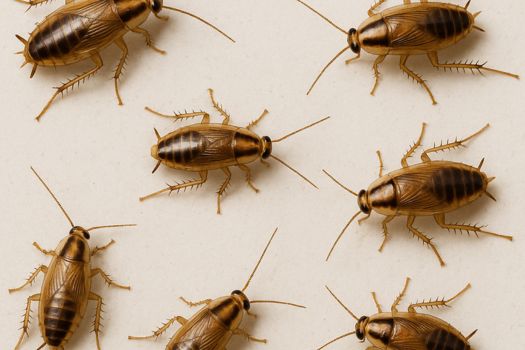
Why German Cockroaches Spread Faster Than Other Roach Species
German cockroaches are one of the most persistent indoor pests, not because they are larger or more aggressive, but because their biology allows infestations to grow and spread at an unusually fast rate. Compared to other roach species, German cockroaches reproduce more quickly, hide more effectively, and adapt easily to indoor environments. These factors allow populations to expand before signs of activity are obvious, which is why infestations often feel sudden and overwhelming.
Rapid Reproduction Drives Fast Infestations
The primary reason German cockroaches spread faster than other roach species is their reproductive cycle. Female German cockroaches carry their egg cases until they are nearly ready to hatch, protecting the developing eggs and significantly increasing survival rates. Each egg case contains multiple offspring, and once hatched, young roaches mature quickly.
This short development cycle allows populations to multiply in a matter of weeks under favorable conditions. Other roach species reproduce more slowly or have longer developmental stages, which limits how quickly infestations can escalate. With German cockroaches, population growth accelerates before effective intervention can occur if the problem is not identified early.
Small Size and Hiding Behavior Allow Colonies to Go Undetected
German cockroaches are smaller than many other roach species, giving them access to tight spaces that are difficult to inspect or treat. They hide inside appliance seams, cabinet joints, wall voids, and other narrow gaps where light and disturbance are minimal. Because they are active primarily at night, infestations often remain hidden during normal daily activity.
This ability to remain concealed allows colonies to establish themselves without being noticed. Larger roach species are more likely to be seen earlier, which often prompts quicker response. German cockroaches, by contrast, are usually well established before visible activity becomes frequent.
Indoor Adaptation and Human Movement Increase Spread
Unlike roaches that live outdoors and enter structures occasionally, German cockroaches prefer indoor environments. They rely on consistent warmth, moisture, and food sources commonly found inside kitchens, bathrooms, and utility areas. Because they are not dependent on outdoor conditions, their activity continues year round without seasonal slowdown.
German cockroaches also spread easily through human activity. They are commonly transported in grocery bags, boxes, appliances, furniture, and deliveries. This allows infestations to move quickly between rooms, units, or buildings. Once introduced into a new location, their rapid reproduction allows them to establish a colony in a short period of time.
Feeding Flexibility Supports Survival and Expansion
German cockroaches are highly adaptable feeders. They consume grease, crumbs, food residue, and a wide range of organic materials. When typical food sources are limited, they can survive on non food materials long enough to continue reproducing.
This feeding flexibility allows them to survive in environments that would not support other roach species. Even minimal food availability is often enough to sustain a growing population, making elimination more difficult once colonies are established.
Why Professional Treatment Is Often Required
Because German cockroaches reproduce quickly, hide effectively, and spread easily, infestations tend to escalate rapidly. Seeing a small number of roaches usually indicates a much larger population hidden nearby. Incomplete or improperly timed treatments often allow surviving roaches to repopulate areas quickly.
Professional pest control focuses on breaking the reproductive cycle through targeted treatment, monitoring, and follow up services. Addressing both visible activity and hidden harborages is critical to preventing re-infestation.
Long Term Control Depends on Early Action
German cockroaches spread faster than other roach species because their biology supports rapid survival and expansion in indoor environments. Delayed response allows infestations to grow beyond simple treatment solutions.
Early identification combined with professional control reduces the size of the infestation, limits spread, and restores healthy indoor conditions before long term problems develop.