

Pest Control in Decatur GA – What Homeowners Need to Know This Spring
Spring comes early to Decatur, Georgia. By mid-March, the dogwoods along Church Street are blooming, temperatures along Scott Boulevard and Ponce de Leon Avenue are climbing back into the 70s, and the city is shifting from quiet winter grey into the lush, green energy that makes this DeKalb County community one of the most appealing places to live in metro Atlanta. That warmth is welcome after a mild winter, but it also sends ants, termites, mosquitoes, and a dozen other pests surging back into active mode beneath the slabs and around the crawl spaces of Decatur’s older homes.
If you own or manage a property in the Oakhurst neighborhood, near Agnes Scott College, or anywhere in the tree-lined blocks between the Decatur MARTA station and Glennwood Estates, you already know the drill. The moment overnight temperatures hold above 55 degrees for a stretch, pest activity climbs fast. Getting ahead of that curve rather than reacting after the fact is the difference between a routine maintenance treatment and a costly infestation that disrupts your family and your property’s value.
This guide covers the pests that cause the most damage and frustration for Decatur GA homeowners each spring and summer, explains why older housing in DeKalb County carries higher risk than newer construction, and outlines what pest control in Decatur GA looks like when it is done correctly.

Why Decatur Homes Face Higher Pest Pressure in Spring
Decatur is one of the older residential cities in metro Atlanta. Much of the housing in the 30030 and 30033 ZIP codes was built between the 1940s and 1970s, an era when crawl space construction was standard, vapor barriers were rarely installed, and exterior foundation sealants simply did not exist. Those characteristics create ideal conditions for termites, rodents, and moisture-loving pests that thrive in DeKalb County’s humid subtropical climate.
Shoal Creek and its tributaries cut through residential sections of Decatur, adding to the ambient moisture levels that encourage pest activity year-round. After heavy spring rains, which are common from March through May along the I-285 corridor, subterranean termite colonies near creek banks begin releasing swarmers. Homeowners often see winged termites emerging from mulch beds, tree stumps, or cracks in brick foundations near Candler Road and Scott Boulevard. Many mistake them for flying ants, delay calling for help, and by summer they are dealing with active tunneling inside floor joists.
Fire ants are equally aggressive in spring. Any sunny patch of lawn in Winnona Park or Glennwood Estates can host multiple colonies by April. Because Decatur’s sidewalks and driveways often run close to landscaped beds, contact with mounds is nearly unavoidable for families with children and pets outside during the day.
Mosquitoes arrive close behind. Standing water collects in clogged gutters, low spots in older yards, and decorative containers throughout historic Decatur neighborhoods. The city’s mature tree canopy, one of its most beloved features, also creates the shaded, humid pockets where mosquitoes rest between feeding cycles. By May, yards along East Lake Drive and Sycamore Street can see mosquito populations that make evening outdoor time genuinely uncomfortable without some form of active management.
Subterranean Termites and the Risk to Older Decatur Properties
Eastern subterranean termites are the most economically damaging pest in Georgia, and Decatur’s combination of moisture, mature tree roots, and older wood-framed construction makes the city a high-risk zone. Swarm season in DeKalb County typically runs from late February through late April, peaking on warm, humid days following rain – exactly the conditions that define a Decatur spring.
Homes with crawl spaces are especially vulnerable. If a crawl space lacks proper encapsulation, the soil beneath the home holds moisture year-round. Termites exploit that moisture gradient to build mud tubes up foundation walls and into structural wood without ever breaking the surface. A professional termite inspection – offered at no charge as part of TruNorth Pest Control’s complimentary service to Decatur GA homeowners – is often the only way to catch an active colony before visible damage appears.
Homeowners should also monitor exterior wood features. Window frames, deck ledger boards, fence posts set in soil, and the wood framing around crawl space vents are common entry points in Decatur GA properties. Painting or sealing exposed wood is a useful deterrent, but it is not a substitute for a professional termite barrier treatment around the full perimeter of the home.
Ants, Cockroaches, and the Urban Pest Mix in DeKalb County
German cockroaches are a persistent problem in the denser residential blocks near downtown Decatur, particularly in multi-unit buildings and older homes where plumbing runs through shared walls. Unlike American cockroaches that wander in from outside, German roaches establish colonies indoors, inside cabinet voids, beneath appliances, and inside wall cavities adjacent to kitchens and bathrooms. They reproduce rapidly and develop resistance to some over-the-counter products, which is why an Integrated Pest Management approach from a licensed professional is far more effective than repeated spray treatments from a hardware store shelf.
Carpenter ants are another concern for Decatur properties with mature trees close to the roofline. These large black ants do not consume wood the way termites do, but they excavate galleries through softened or moisture-damaged wood to nest. A mature colony inside a wall void or roof rafter can cause significant structural damage over a few seasons. If you find large black ant frass (a sawdust-like material) near window frames or in the garage of your Oakhurst home, scheduling an inspection promptly is the right move.
Odorous house ants and pavement ants also surge in spring, entering kitchens through the same foundation gaps and utility line penetrations that other insects exploit. A single-day baseboards spray rarely resolves a deep colony. Effective pest control services address the exterior perimeter, harborage sites, and entry points as a coordinated system rather than treating symptoms one surface at a time.
Mosquitoes and Ticks Near Decatur Parks and Greenways
Decatur’s parks and green corridors, including Harmony Park, Legacy Park, and the recreation areas along South Candler Street, give families beautiful outdoor space. They also create conditions where ticks and mosquitoes establish themselves in numbers that make yard edges and trail borders a real concern from April through October each year.
Lone star ticks and black-legged ticks are active in DeKalb County well before most homeowners think about tick season. Adult black-legged ticks can be active any time temperatures rise above 35 degrees, meaning early spring warm spells in Decatur can bring tick exposure long before school lets out for summer. Properties that back up to wooded areas, creek banks, or tall grass along the Shoal Creek greenway face the highest risk.
The EPA’s Integrated Pest Management principles highlight the importance of combining cultural controls, exclusion, and targeted treatments for the best long-term results. That is the framework behind TruNorth’s mosquito and tick control program, which starts with a property assessment to identify breeding sites, including clogged gutters, standing containers, low wet areas, and dense ground cover. Treatments are timed to the pest’s biology rather than a fixed calendar, which dramatically improves results through the long Decatur summer.
DIY Pest Control Versus Professional Service in Decatur GA
The hardware store pest control aisle has grown considerably in recent years, and the marketing on many products can make it sound like a spray bottle and some granules are all you need. For Decatur homeowners dealing with occasional ants in the kitchen or a few spiders in the garage, targeted consumer products can manage the nuisance. For anything more serious, including subterranean termites, German roach colonies, mosquito breeding sites, or rodents that have found their way through a crawl space vent, professional treatment is not just more convenient. It is genuinely more effective.
The reason comes down to biology, product access, and application technique. Licensed technicians complete training through professional programs including the University of Georgia’s pest management curriculum, giving them a precise understanding of pest behavior, life cycles, and the environmental conditions that sustain infestations. They also have access to professional-grade products and equipment that are not available to consumers. You can explore more about why professional pest control consistently outperforms DIY methods in TruNorth’s online resource library.
TruNorth Pest Control was founded on more than 34 years of industry experience, built on the foundation Tony Carder laid when he first entered the pest control field in 1985. That history shapes how TruNorth technicians approach a property in Decatur GA – not as a checklist of surfaces to spray, but as a system of harborage sites, entry points, and environmental conditions to address together.
What Pest Control in Decatur GA Looks Like With TruNorth
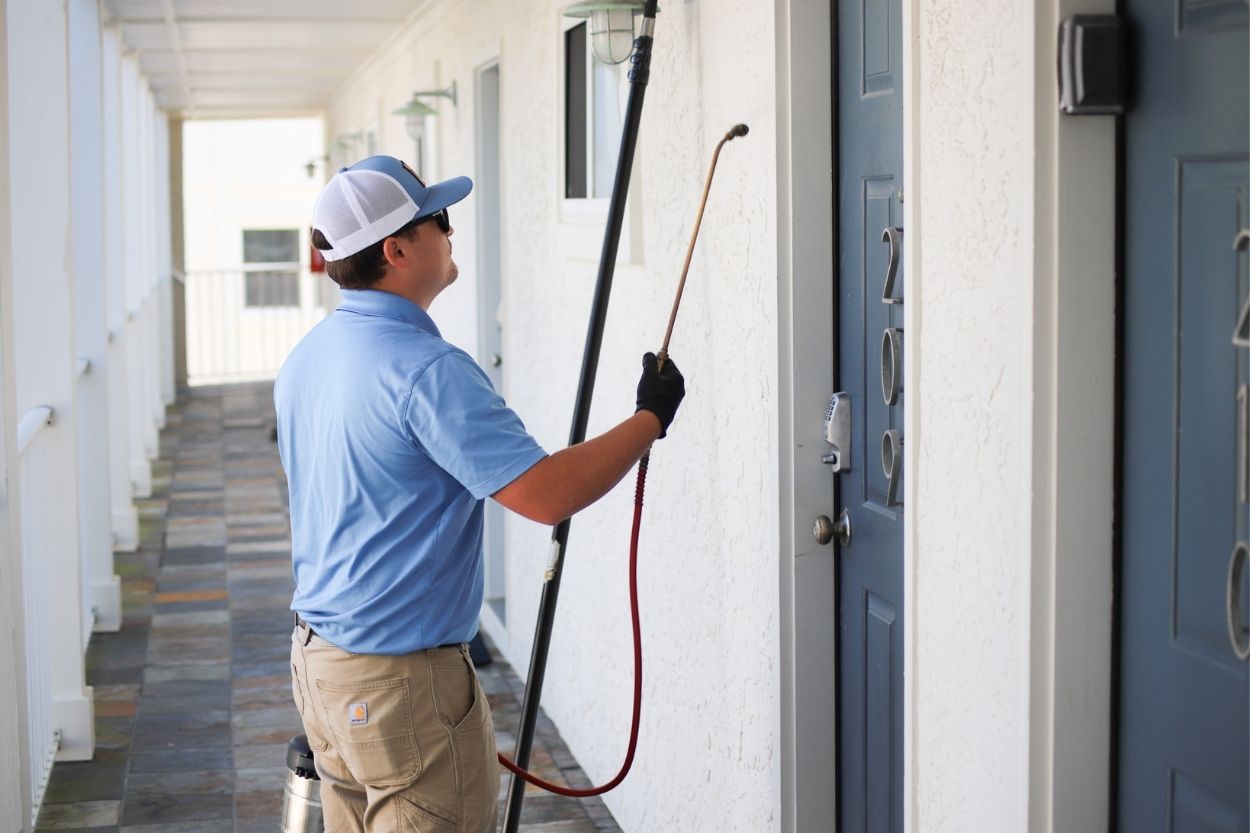
Every TruNorth service visit to a Decatur property starts with an exterior perimeter inspection. The technician walks the foundation line, checks crawl space vents and access points, looks at weatherstripping around doors and windows, and notes any moisture or mulch conditions driving pest activity toward the structure. That walkthrough takes only a few minutes, but it is where most actionable findings come from in an older Decatur home.
Interior service focuses on the kitchen, bathrooms, utility areas, and any rooms where activity has been reported. Treatment methods depend on what pests are present: gel baits placed in void spaces for cockroaches, perimeter granulars for fire ants, and liquid barrier treatments for general pest exclusion. Every product TruNorth uses is selected for its safety profile around children, pets, and the plants and pollinators that make Decatur’s residential neighborhoods so appealing.
Recurring protection plans are available quarterly or monthly depending on the pressure a property faces. Pest control in Decatur GA homeowners on a recurring plan also receive priority re-service: if pests return between regular visits, a technician is dispatched quickly at no additional cost. Understanding how seasonal pest patterns shift across the year helps Decatur homeowners know what to watch for between visits and when to call.
TruNorth serves all of Decatur GA and greater DeKalb County, with Saturday and after-hours appointments available for homeowners who cannot take time off during the standard weekday window. Contact TruNorth Pest Control today to schedule your complimentary inspection and get a clear picture of the pest pressure your Decatur home is facing this season.
TruNorth Pest Control serves Decatur GA and surrounding DeKalb County communities. Our headquarters are at 5916 East Lake Parkway, Suite 315, McDonough, GA. Call (678) 325-7770 Monday through Friday, 8 a.m. to 5 p.m., or Saturday, 9 a.m. to 2 p.m.
Frequently Asked Questions About Pest Control in Decatur GA
What pests are most common in Decatur GA homes during spring and summer?
The most common pests in Decatur GA homes during spring and summer include subterranean termites, fire ants, mosquitoes, German cockroaches, carpenter ants, and odorous house ants. Properties near Shoal Creek and other low-lying areas also see elevated mosquito and tick activity from April through October. Decatur’s older housing stock makes subterranean termites a particular concern, since crawl space homes provide ideal conditions for termite colony expansion during Georgia’s wet spring season.
How do I know if I have termites in my Decatur Georgia home?
Signs of termite activity in Decatur Georgia homes include discarded wings near windowsills and door frames left by swarmers in spring, thin mud tubes on foundation walls or crawl space piers, hollow-sounding wood when tapped, and small piles of frass near wood trim or baseboards. Swarm season in DeKalb County typically runs from late February through April. Because termites often remain hidden inside walls and floor structures for years, a professional inspection is the most reliable way to confirm activity before visible damage appears.
Is professional pest control safe for children and pets in Decatur homes?
Yes. TruNorth Pest Control uses eco-friendly, family-safe treatment products selected specifically for their low-toxicity profiles around children, pets, and common garden plants. Our technicians apply treatments to targeted areas and follow all label re-entry requirements, which are typically very brief. Most families and pets can return to treated areas within a short time after service. If you have specific concerns about a household member with allergies or sensitivities, our technician will walk you through the products used during your service appointment.
How often should Decatur GA homeowners schedule pest control service?
Most Decatur GA homeowners benefit from quarterly pest control service at a minimum, aligning treatments with the four seasonal shifts that drive pest activity in DeKalb County. Homes with crawl spaces, mature landscaping close to the foundation, or a history of termite or moisture problems may benefit from monthly visits. TruNorth offers flexible recurring plans, and all plans include complimentary re-treatments if pests return between scheduled visits.
Does TruNorth Pest Control serve all neighborhoods in Decatur GA?
Yes. TruNorth Pest Control serves all neighborhoods in Decatur GA including Oakhurst, Winnona Park, Glennwood Estates, East Lake, downtown Decatur, and surrounding DeKalb County communities. We offer Saturday appointments and after-hours scheduling for homeowners who cannot take time off during the standard weekday window. Call (678) 325-7770 or use our online contact form to book your complimentary inspection.
This guide was written by the team at TruNorth Pest Control, a family-owned company serving homeowners and businesses in Decatur GA and across metro Atlanta and central Florida. Founded on more than 34 years of pest control experience by Tony Carder, who entered the industry in 1985, TruNorth combines Integrated Pest Management principles with eco-friendly treatments and a 100 Percent Satisfaction Guarantee. If you are dealing with termites, mosquitoes, roaches, or any other pest in your Decatur Georgia home, we are ready to help. Contact us today for a complimentary inspection.