
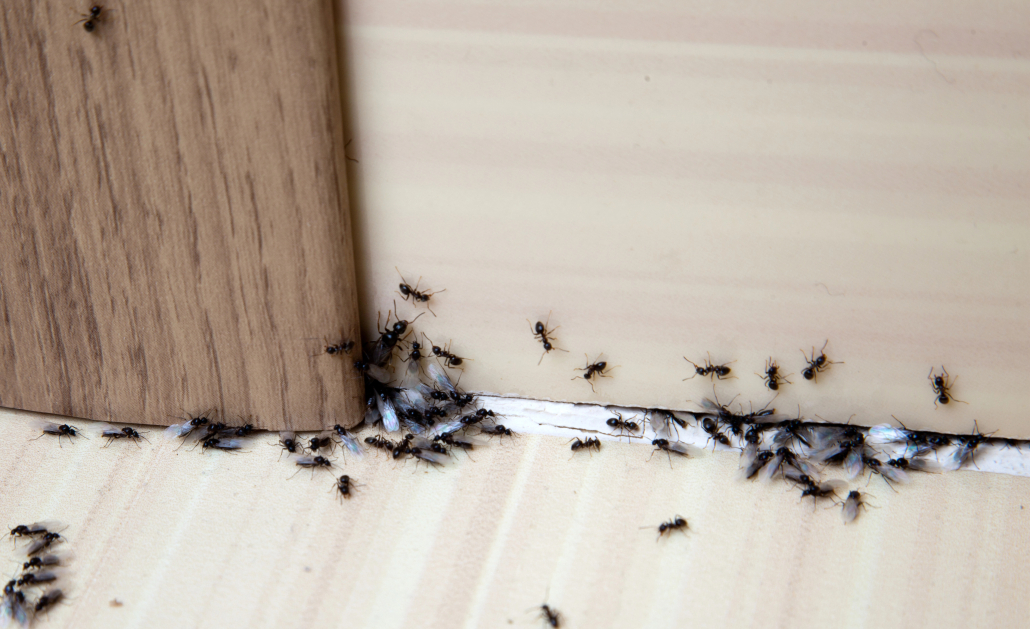
Why Odorous House Ants Are Common in Kitchens and Bathrooms
Odorous house ants are one of the most frequently reported ant species found inside homes, and their presence is rarely random. Kitchens and bathrooms consistently attract these ants because the conditions in these areas closely match what the species needs to survive and expand. Understanding why odorous house ants concentrate in these spaces helps explain why infestations often persist and why professional treatment is necessary to fully resolve the problem.
Moisture and Food Sources Create Ideal Conditions
Odorous house ants require consistent moisture to survive, which immediately makes kitchens and bathrooms attractive. Plumbing fixtures, sinks, dishwashers, and drains provide reliable access to water, even in otherwise dry homes. Small leaks, condensation, and damp surfaces are often enough to sustain ant activity without being noticeable to homeowners.
Food availability further reinforces these areas as prime nesting and foraging zones. Odorous house ants are particularly drawn to sweet and greasy substances, both of which are common in kitchens. Crumbs, spills, residue inside cabinets, and food waste create dependable feeding opportunities that allow colonies to remain active and grow without needing to travel far.
Nesting Behavior Keeps Colonies Close to Activity
Unlike some ant species that build large centralized nests, odorous house ants frequently form multiple smaller nesting sites. This behavior allows colonies to spread throughout a structure rather than remaining confined to one location. Kitchens and bathrooms often serve as central hubs because they provide both moisture and food, making them ideal staging areas for colony expansion.
These ants commonly nest inside wall voids, under flooring, behind cabinets, or near plumbing penetrations. Because nests are hidden, activity is often mistaken for isolated foraging when in reality a larger colony is already established nearby.
Why Odorous House Ants Are Difficult to Eliminate
Odorous house ants respond aggressively to disruption. When colonies are threatened by improper treatment or disturbance, they often split into multiple sub-colonies. This behavior, known as budding, allows the infestation to spread further throughout the home rather than being eliminated.
This is why surface sprays and homeowner treatments frequently fail. Killing visible ants does not address nesting sites and can unintentionally increase activity elsewhere. Effective control requires targeting the colony structure rather than individual ants.
How Seasonal Changes Increase Indoor Activity
Odorous house ants frequently move indoors when outdoor conditions become less favorable. Heavy rain, temperature fluctuations, or dry periods can push colonies inside where conditions are more stable. Kitchens and bathrooms become safe environments that allow colonies to remain active regardless of outdoor changes.
Because these ants can remain active year round indoors, infestations do not always follow predictable seasonal patterns. Activity may increase suddenly even when weather conditions seem mild.
Why Professional Treatment Is More Effective
Successful treatment focuses on eliminating colonies rather than visible ants. Professional pest control uses targeted methods designed to disrupt colony reproduction and movement. This approach reduces the likelihood of colony splitting and prevents ants from simply relocating within the structure.
Ongoing monitoring ensures that hidden nesting areas are addressed and that activity does not return once treatment is complete. This structured approach is far more effective than repeated surface treatments.
Long Term Control Requires Understanding the Source
Odorous house ants continue to return when moisture sources, nesting areas, and colony behavior are not properly addressed. Kitchens and bathrooms remain focal points because they consistently provide what the ants need to survive.
By identifying how and why these ants establish themselves in specific areas, long term control becomes achievable. Addressing the infestation at its source prevents repeated activity and restores pest free living spaces.